
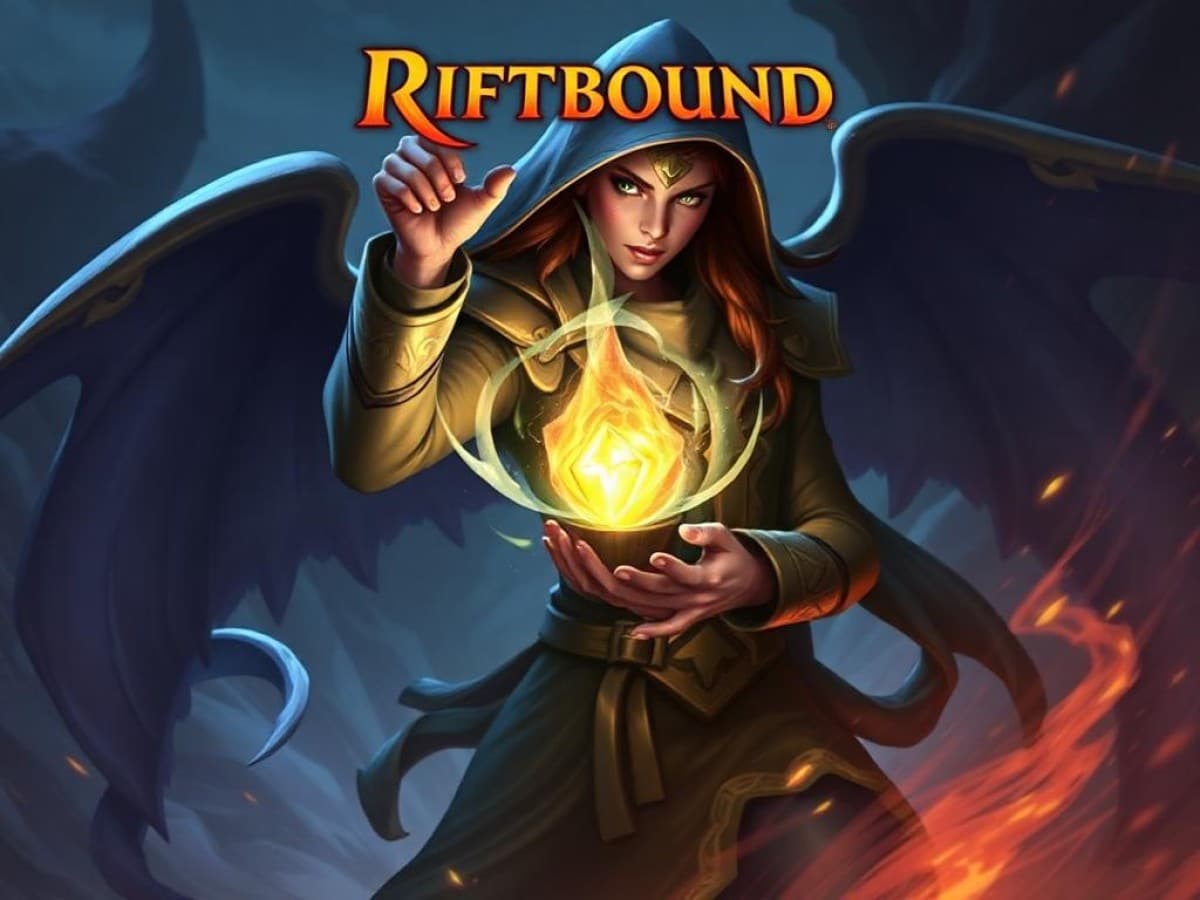
The realm of trading card games (TCGs) remains highly vibrant, with leading titles such as Magic: The Gathering, Pokemon, and Disney Lorcana drawing significant attention. Riot Games, leveraging its globally acclaimed League of Legends franchise, has decided to step into this competitive field with its new TCG, Riftbound, based in the League of Legends universe.
Our recent visit to Riot Games offered an exclusive opportunity to explore this fresh addition to the TCG scene, where we learned the game’s rules directly from its creators and witnessed firsthand the gameplay involving four different trial decks. Additionally, we were given the privilege to unveil three new cards during our preview.
While the entrenched giants of the TCG world are formidable competitors, Riot Games is poised to carve out a niche with Riftbound. From our gameplay experience, the game’s core mechanics are compelling enough to make a mark in the competitive arena, and now it’s up to Riot to demonstrate the game’s long-term viability and appeal.
Stepping Into the Rift
236M views in 10 weeks: how KPop Demon Hunters dethroned Red Notice
Materialists Raises Eyebrows: Sharp Satire or Elitist Attack on Modern Love?
Park Chan‑wook’s 2025 Venice Comeback: 6‑Minute Ovation and a 20‑Year Return
Julia Roberts’ 6‑minute ovation at Venice 2025 — the quote already igniting awards talk
Riftbound introduces a unique gameplay approach compared to Magic or Pokemon by emphasizing the conquest of “battlefields”—two central location cards played by each participant. Players earn points by moving units to these cards and securing control. These battlefields can switch hands multiple times, adding a dynamic layer to the game.
The first player to accumulate eight points emerges victorious. However, achieving this is not merely about conquering eight separate battlefields. The game clincher requires a player to control both battlefields simultaneously. If a player at seven points captures one battlefield while the opponent controls both, further strategic moves are necessary.
Beyond mere locations for conquest, each battlefield also grants specific powers to the player holding control, enhancing the strategic depth of the game. Players select battlefields that synergize with their deck strategies. For instance, the Viktor trial deck focuses on generating numerous Recruit tokens, facilitated by the Altar to Unity battlefield, which allows the holder to create a Recruit token at their base.
Speaking of bases, each player’s area is divided into various zones, defined as follows:
- Base: A safe zone where players organize their units before deployment to a battlefield.
- Battlefield: An active combat zone where units can be attacked and destroyed.
- Legend: Houses a powerful Legend card that provides abilities to enhance the player’s strategy.
- Champion/Leader: A designated zone for the Leader card, ensuring its availability at least once per game.
- Main Deck Zone: Contains the main assortment of unit, gear, and action cards.
- Rune Zone: Comprises 12 resource cards from which players draw two runes each turn to fund their card plays.
Despite the complexity, the game’s layout on provided playmats makes the learning curve manageable and gameplay intuitive.
Harnessing the Runes
Riftbound’s resource system introduces a novel twist to the TCG formula. Players draw Rune cards, which are used to finance card actions. The game features six rune colors, with decks permitted to include up to two colors.
Runes are activated by being turned sideways, signifying their use to meet cost requirements. Some cards also require specific colored runes to be recycled back into the deck, adding a strategic layer to resource management.
For example, the newly revealed card Heimerdinger, Inventor: necessitates three runes for activation, plus a specific blue rune that must be recycled.
This system encourages a balance between using and recycling runes, as excessive recycling can deplete available resources for future turns.
Primed for Combat
Gameplay in Riftbound follows a straightforward sequence dubbed “ABCD”:
- Awaken phase: All cards are readied.
- Beginning phase: Turn-start effects are resolved, and points are tallied for controlled battlefields.
- Channel phase: Two Rune Cards are drawn and placed in the Rune Zone.
- Draw phase: A card is drawn from the Main Deck.
Players then proceed in any chosen order to deploy units, engage in battles, or execute other actions, optimizing their strategy. Notably, newly played units cannot challenge a battlefield immediately, akin to the “summoning sickness” rule in other TCGs.
Combat involves intricate tactics with Action and Reaction cards that can alter unit capabilities before resolving damage. The player controlling a battlefield at the end of combat earns a point, while the opposing units are removed from the battlefield.
The dynamic of battle and strategy continues until a player secures the decisive eighth point, claiming victory.
Our sessions at Riot were intensely competitive and exhilarating, demonstrating Riftbound’s potential in the TCG market. The game’s blend of familiar mechanics with innovative elements like rune management and battlefield control promises a captivating experience for players.
With Riftbound, Riot Games may well be adding another success story to its portfolio, appealing to both seasoned and new TCG players when it launches later this year.
Similar Posts
- Avatar’s Jet Conjures Magic in Magic: The Gathering with Four New Cards!
- Battlefield 6 Launch: Producer Confirms Servers Ready After Successful Open Beta!
- Battlefield 6 Unleashed: Experience the Intense Combat and Roar of Warfare Now!
- Magic: The Gathering Meets Final Fantasy: Unveiling Game Mechanics and Keywords!
- Magic: The Gathering Meets Avatar: The Last Airbender – Full Card Reveal!

Ava covers the intersection of celebrity culture and social media, keeping up with the ever-changing world of online influencers and viral moments.