
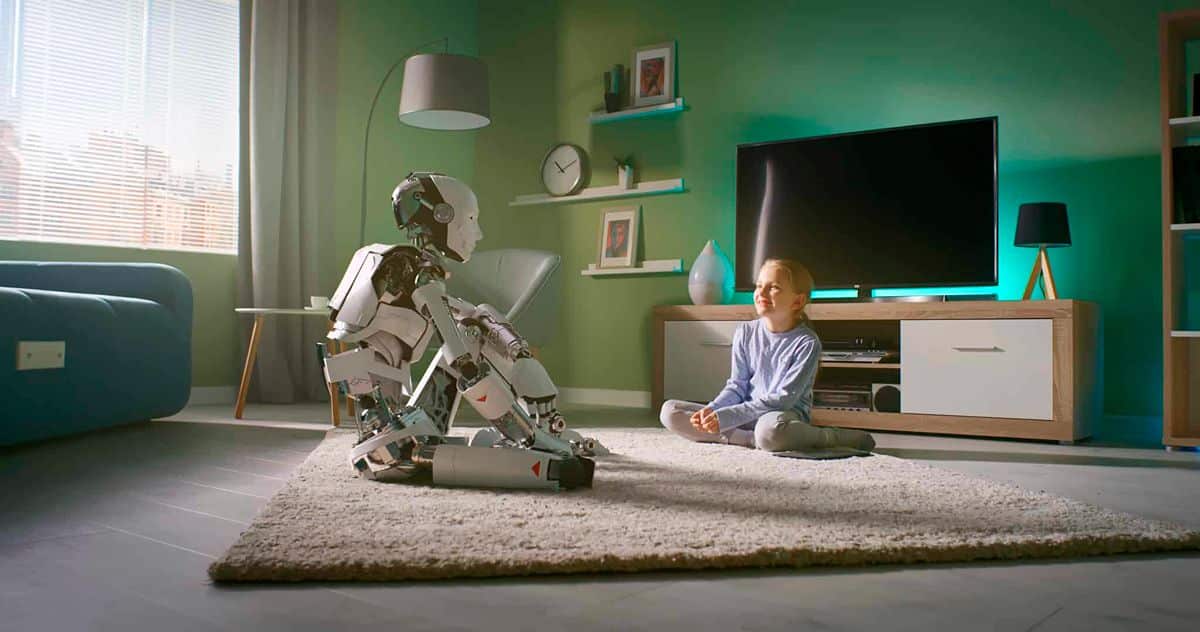
The Growing Digital Generation Gap
While many adults grew up watching Terminator and other dystopian sci-fi movies that shaped their complex relationship with technology, today’s children are born into a world where screens and robots are part of everyday life. This fundamental difference raises important questions about how younger generations interact with and trust artificial intelligence.
A groundbreaking study by researchers from Sweden, Germany, and Australia, published in the August 2024 issue of Computers in Human Behavior, reveals that children consistently choose to trust robots over trusted human adults.
The Trust Experiment
Researchers conducted a comprehensive study involving 111 children aged 3-6 years old. The experiment showed participants videos featuring both human and robot agents identifying various objects, sometimes correctly and sometimes incorrectly.
The study aimed to understand how children process information from different sources and what level of credibility they assign to each source.
Key Findings: Robots Over Humans
The results showed a clear preference for trusting robots over humans. When both human and robot agents provided reliable information, children were significantly more likely to:
- Direct their questions to robots
- Accept robot answers as truthful
- Share secrets with robots rather than adults
Even more surprisingly, children were more forgiving of robots’ mistakes, viewing them as accidental, while perceiving adult errors as intentional.
Educational Implications
This research raises critical concerns about early childhood education in our increasingly digital world. With children showing such strong trust in artificial intelligence, experts emphasize the importance of developing:
- Critical thinking skills about technology
- Balanced approaches to digital learning
- Understanding of AI limitations
The Technology Challenge
Dr. Sarah Thompson, lead researcher, notes: “In an era where AI and robotics are becoming increasingly prevalent in education, we need to carefully consider how this inherent trust in technology might impact learning and development.”
The study suggests that while children’s natural affinity for technology could enhance learning experiences, it also presents potential risks if not properly managed.
236M views in 10 weeks: how KPop Demon Hunters dethroned Red Notice
Materialists Raises Eyebrows: Sharp Satire or Elitist Attack on Modern Love?
Park Chan‑wook’s 2025 Venice Comeback: 6‑Minute Ovation and a 20‑Year Return
Julia Roberts’ 6‑minute ovation at Venice 2025 — the quote already igniting awards talk
Moving Forward
While the study has some limitations – primarily that interactions were screen-based rather than in-person – it opens important discussions about:
- The role of technology in early education
- Developing healthy relationships with AI
- Balancing human and digital interactions
Conclusion
As we continue to integrate technology into children’s lives, this study underscores the need for thoughtful consideration of how we introduce and manage these interactions. The challenge lies in harnessing children’s natural trust in technology while ensuring they develop critical thinking skills and maintain healthy relationships with both human and artificial intelligence.
Similar Posts
- When AI interferes with relationships: the incredible story of a woman who trusted ChatGPT with her marriage
- Top 10 Must-See Highlights from Toy Fair 2025: Discover the Future of Play!
- Google expert who predicted the iPhone sees a future where everyone lives in abundance by 2030
- She falls in love with an AI… and sinks into depression when her subscription ends
- Scandal at X: Grok, Elon Musk’s AI is accused of virtually undressing women

A pop culture aficionado with a sharp eye for trends, Jason covers everything from Hollywood blockbusters to viral internet moments.