
A revelation that shakes up Japanese archaeology
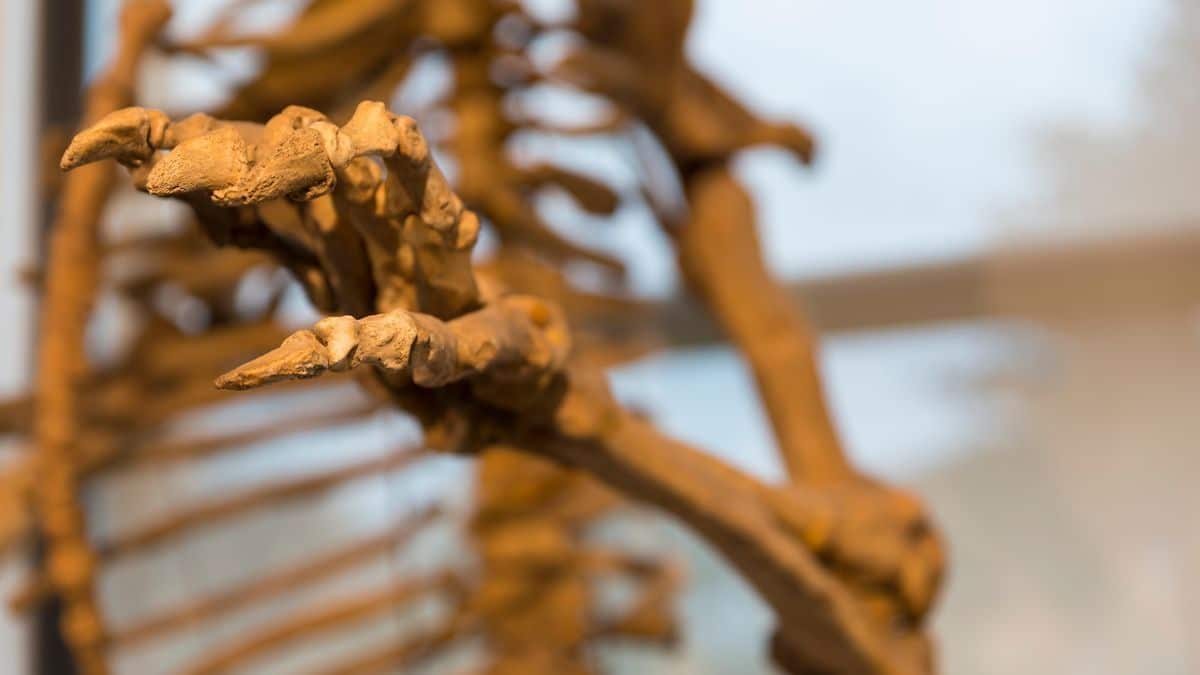
Japan’s oldest “human” traces have just undergone a spectacular twist. Bones discovered in the 1950s near Toyohashi, long considered to be proof of the first human presence in the archipelago, have turned out to belong to a prehistoric bear. This shocking discovery calls into question almost 70 years of scientific belief, and is a perfect illustration of how technological advances can rewrite history.
Modern technology reveals a historical error
Using CT scans and high-resolution imaging, Prof. Gen Suwa and his team at the University of Tokyo meticulously re-examined the humerus and femur fragment. Their detailed morphological analyses revealed unambiguously that these were the bones of Ursus arctos, a brown bear that lived around 20,000 years ago.
This revelation underlines the crucial importance of new technologies in archaeological research.
The new chronology of Japan’s earliest inhabitants
Following this discovery, the oldest authenticated human remains in Japan can now be found near Hamakita, dating from 14,000 to 17,000 years ago.
Further south, in the Ryukyu Islands, traces of human activity dating back 32,000 years have been identified, suggesting early migration routes to the Japanese archipelago. These discoveries provide a new map of early human presence in Japan.
The challenges of fossil identification
Confusion between human and animal bones is not uncommon in archaeology. The fragmentary state of fossils, their degradation and the technological limitations of the time can easily lead to misinterpretation.
A similar example from Alaska, where a bear bone turned out to be that of a Native American woman, illustrates the complexity of such identifications.
The constant evolution of archaeological science
Current technological advances, including DNA analysis, 3D imaging and vast comparative databases, are radically transforming our ability to identify and understand the remains of the past.
This evolution allows for unprecedented precision in the study of fossils, and reminds us that science is a dynamic process in constant evolution.
236M views in 10 weeks: how KPop Demon Hunters dethroned Red Notice
Materialists Raises Eyebrows: Sharp Satire or Elitist Attack on Modern Love?
Park Chan‑wook’s 2025 Venice Comeback: 6‑Minute Ovation and a 20‑Year Return
Julia Roberts’ 6‑minute ovation at Venice 2025 — the quote already igniting awards talk
Conclusion
This revelation about the “false” human bones of Toyohashi perfectly illustrates the evolutionary nature of scientific research. It reminds us of the importance of remaining humble in the face of our certainties and open to questioning, even of long-accepted theories.
This story shows that the quest for scientific truth is an ongoing process, where each new technology can bring its own surprises and discoveries.
Similar Posts
- The discovery no one expected: has a new ocean really just been discovered 700km below Earth’s Surface ?
- What lies hidden in these Hittite tablets has left experts stunned
- A 3,500-kilometre-long mountain range discovered under the Antarctic ice sheet
- Pokemon Fossils Invade America: Real Dinosaurs Join the Exhibit Next Year!
- A 124-year-old dream is about to come true thanks to wireless electricity for homes

A pop culture aficionado with a sharp eye for trends, Jason covers everything from Hollywood blockbusters to viral internet moments.