
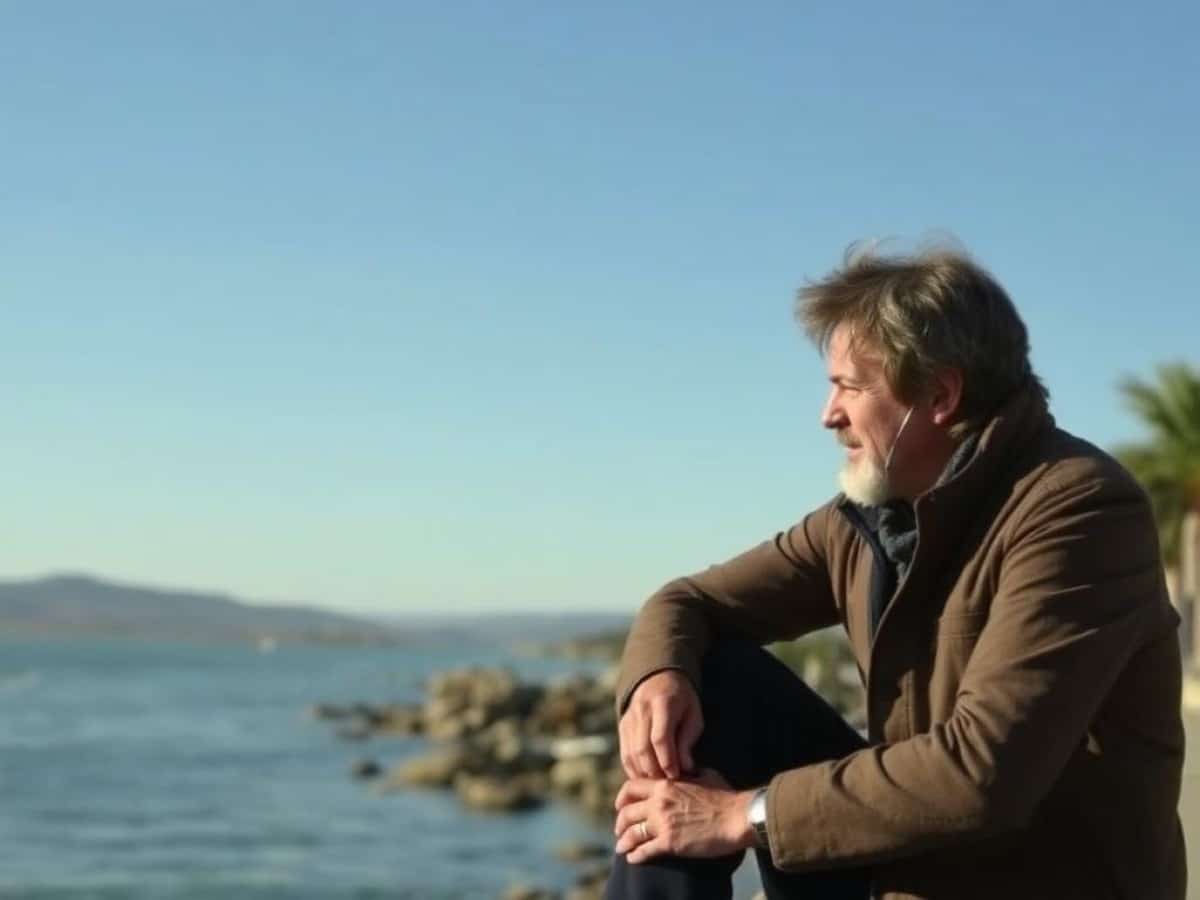
Catalan director Pere Vilà Barceló discusses the theme of rape in his film “When a River Becomes the Sea,” but deliberately avoids depicting it on screen.
“The narrative is centered around the trauma and the healing process, which is a lengthy and intricate path. Many women have shared their experiences with us, focusing more on the recovery than the attack itself,” he explained to The Bangin Beats.
Debuting at the Karlovy Vary Film Festival, his film delves into “scenes that don’t make it into the headlines,” he says.
Popular on The Bangin Beats
“It investigates the often unseen emotional, psychological, and social aftermath. This choice was not only artistic but also one of respect,” he emphasized.
“We filmed a courtroom scene but ultimately excluded it to prevent re-victimization and to steer clear of voyeurism and sensationalism. Many survivors describe the legal process as a secondary assault, compounded by institutional violence and lack of sensitivity,” he added.
236M views in 10 weeks: how KPop Demon Hunters dethroned Red Notice
Materialists Raises Eyebrows: Sharp Satire or Elitist Attack on Modern Love?
Park Chan‑wook’s 2025 Venice Comeback: 6‑Minute Ovation and a 20‑Year Return
Julia Roberts’ 6‑minute ovation at Venice 2025 — the quote already igniting awards talk
The protagonist, Gaia, a young archaeology student portrayed by Claud Hernández, struggles to voice her ordeal. When she eventually discloses that her boyfriend assaulted her, she faces skepticism and disregard.
“This is a recurring issue I’ve encountered. Victims often face doubt and isolation, while the perpetrator continues life unaffected, often oblivious to the damage caused,” noted the filmmaker.
“This reflects a broader societal issue rooted in patriarchal values, which is why I integrated an archaeological angle to explore the historical and evolutionary origins of patriarchy, examining when and how it developed and who has perpetuated it,” he explained.
Produced by Xavier Pérez Díaz through Fromzerocinema, “When a River Becomes the Sea” represents more than just a film; it’s a venture deeply embedded in social activism and awareness,” Vilà Barceló remarked.
“Working with various survivor associations has allowed us to amplify their voices and their messages,” he said, referencing the collaboration with over 100 women and several psychologists specializing in trauma.
“I am also developing a series of documentary features, including interviews and reports, which together with the film, aim to serve as educational resources to prompt reflection and awareness on this issue,” he continued.
The project originated eight years ago during a filmmaking workshop in his hometown high school.
“When the topic of the student film came up, sexual abuse was suggested. Several young girls, only 14 or 15, began sharing their personal experiences, which deeply moved me,” he recalled.
Driven to deepen his understanding, he began interviewing survivors of all ages. “These interviews have not only altered my worldview but have transformed me personally and professionally,” he shared.
In a poignant film scene, a distraught Gaia questions, “Is it always going to be like this?”
“It’s more than just despair; it’s a profound disorientation. She no longer recognizes herself or understands why she was forced to change,” he described. “A young girl once told me it felt like being unzipped, scrambled, and zipped back up. Gaia’s question essentially asks, ‘Will I ever return to who I was before?’ Sadly, the answer is no.”
“Her father, played by Àlex Brendemühl, initially feels powerless to help his daughter. He’s struggling to connect with someone he’s known all her life, navigating emotional territories that are foreign to him and most people around her,” he explained.
The film also addresses how sexual violence impacts men—fathers, brothers, partners—who are often unprepared to face such realities. “Highlighting the father’s journey was crucial. It showcases a form of masculinity that is compassionate rather than toxic,” he noted.
“Most are not ready to confront situations like these. Despite his lack of emotional tools, her father chooses to remain by her side, which to me, is a profound act of love,” he concluded.
He emphasized, “Men must also engage in the fight for equality, beginning with showing care for our loved ones. This is an issue that concerns everyone, irrespective of gender.”
Similar Posts
- Miro Remo’s ‘Better Go Mad in the Wild’ Wins Big at Karlovy Vary: Stellan Skarsgard Awarded Crystal Globe
- Slovenian Director Kukla’s New Film ‘Good Girl’: Inspired by Greek Comedy, Stars from ‘Fantasy’ Join!
- KPop Sensation EJAE Creates Hit ‘Golden’ En Route to Dentist: Inside the Journey!
- “Ragnarok Director’s New Film ‘Pretty Young Love’ Debuts: A Danish Coming-of-Age Sensation!”
- Daily Variety Podcast Debuts: Cynthia Littleton Takes the Mic in New Show!
With a knack for uncovering hidden gems, Blake dives deep into the world of indie films and underground cinema.