
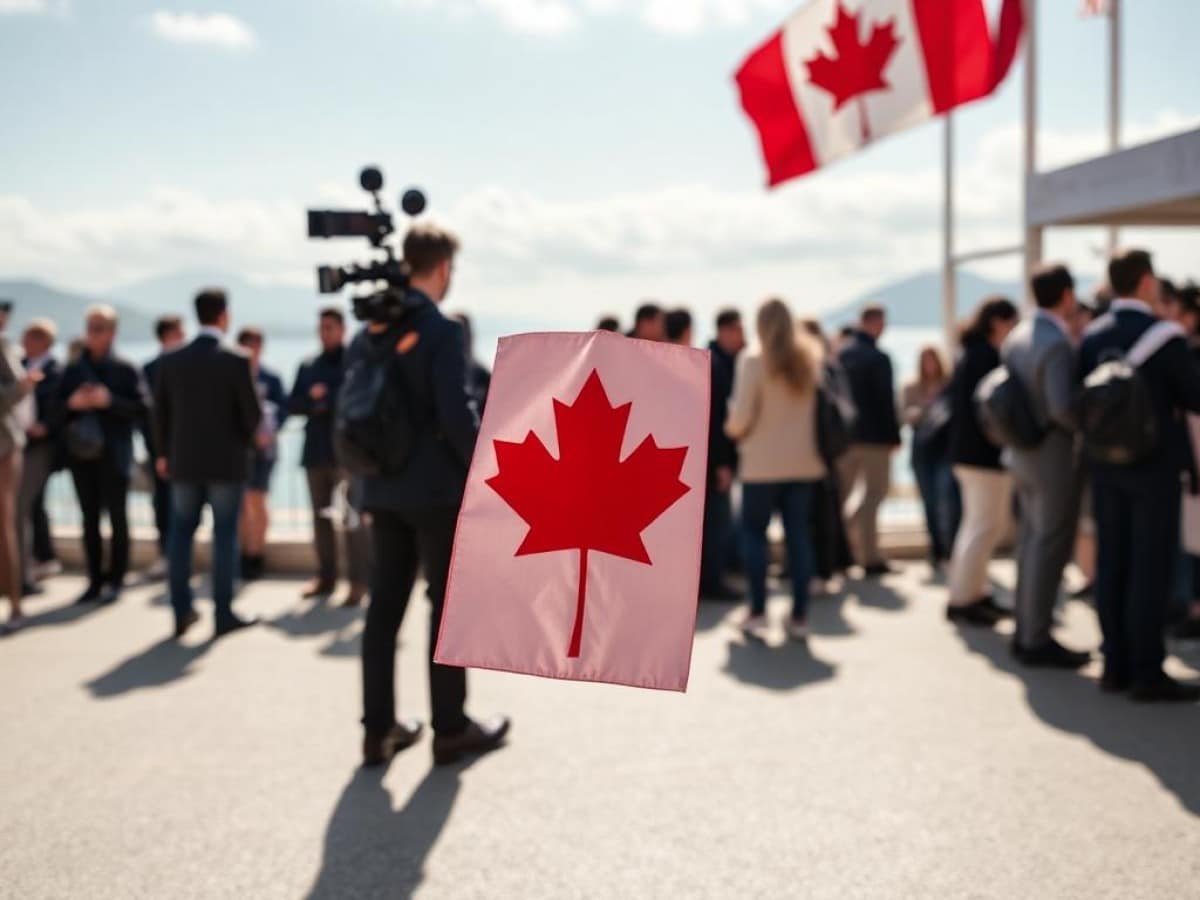
Canada arrives at the Cannes Film Festival with a specific agenda: to steer the conversation away from the potential chaos of U.S. tariffs on the international film sector and towards the advantages of artistic cooperation and joint productions involving Canadian talent and enterprises.
The recent achievements of Canadian cinema, such as Matt Johnson’s SXSW Midnighter audience-award winning “Nirvana the Band the Show the Movie,” alongside other films showcased at this year’s festival, highlight a shift towards innovative blends of horror and comedy. Additionally, Canada continues to strengthen its reputation in animation and documentaries. In recent years, new companies with a focus on regional and holistic production have emerged, producing films that challenge and expand the definition of Canadian film. Indigenous filmmakers and companies have been instrumental in this evolution, consistently participating in and impacting major global festivals and markets.
“In Canada, we produce arthouse films,” mentions Montreal producer Sylvain Corbeil of Metafilms, which backed Matthew Rankin’s highly praised surreal comedy “Universal Language.” Corbeil notes that being outside the U.S. market pressures allows more creative freedom in film-making, leading to more unique and expressive arthouse cinema.
Corbeil, reflecting on the distinctiveness of Quebec’s cinema within North America, emphasizes the influence of language and cultural identity on filmmaking. “Our mother tongue shapes how we see the world,” he asserts. He also stresses the importance of preserving a diversity of voices in global cinema, criticizing the dominance of content by a few large nations.
Since its establishment in 2013, Metafilms has consistently brought notable films to Cannes. This year, they present Anne Émond’s “Peak Everything,” starring Patrick Hivon and Piper Perabo, which explores themes of environmental anxiety with a mix of absurdity and romance. The film is being marketed internationally by Indie Sales.
Émond shares that the idea for “Peak Everything” came to her while using a therapeutic lamp, which inspired the quirky love story at the heart of the film. She expresses frustration over the global negligence towards climate change, noting that other pressing global issues often overshadow this critical concern.
Félix Dufour-Laperrière’s “Death Does Not Exist,” also premiering at the Directors’ Fortnight, delves into themes of violence and fantasy. Inspired by historical and contemporary issues in Quebec, the film portrays a young woman’s escape into a fantastical forest following a violent upheaval. Dufour-Laperrière describes the film as a meditation on the paradox of violence in an ostensibly peaceful world.
“Bread Will Walk” by Alex Boya and several other animated works from Canadian creators are also featured at the festival, demonstrating the country’s strong presence in animation.
236M views in 10 weeks: how KPop Demon Hunters dethroned Red Notice
Materialists Raises Eyebrows: Sharp Satire or Elitist Attack on Modern Love?
Park Chan‑wook’s 2025 Venice Comeback: 6‑Minute Ovation and a 20‑Year Return
Julia Roberts’ 6‑minute ovation at Venice 2025 — the quote already igniting awards talk
The Frontières Platform, a collaboration with Canada’s Fantasia Intl. Film Festival, showcases several Canadian projects. Highlights include Sebastian McKinnon’s “The Stolen Child,” a medieval fantasy, and Samuel Scott’s indie blend of music, horror, and sci-fi in “Turn It Up!”
Tim Riedel’s “Ancestral Beasts,” a psychological horror, is part of the Platform’s Proof of Concept section. Riedel aims to blend personal experiences with genre elements to create a compelling narrative.
Filmmaker Rylan Friday, representing the Indigenous Screen Office, discusses his feature project “Terror/Rising,” which builds on his earlier work to explore the real and metaphorical horrors faced by Indigenous communities in Canada. Friday aims to challenge stereotypes and promote Indigenous and LGBTQ2S+ narratives within the horror genre.
Similar Posts
- Breaking News: Buffy Saint-Marie Loses Order of Canada: Shocking Rescindment Revealed!
- Gabriel Mascaro’s ‘The Blue Trail’ Wins Berlin Silver Bear: Brazil’s Top Arthouse Hit Eyes Oscar!
- Pierre Richard’s Directorial Return: ‘The Man Who Saw the Bear’ Hits Loco Films Before Cannes Tribute!
- Doha Film Institute CEO Honored at Cannes: Fatma Alremaihi Launches New Festival, Elevating Qatar’s Cultural Scene
- Italian Rising Stars Shine: Young Filmmakers Dominate Cannes’ Un Certain Regard

With a knack for uncovering hidden gems, Blake dives deep into the world of indie films and underground cinema.