
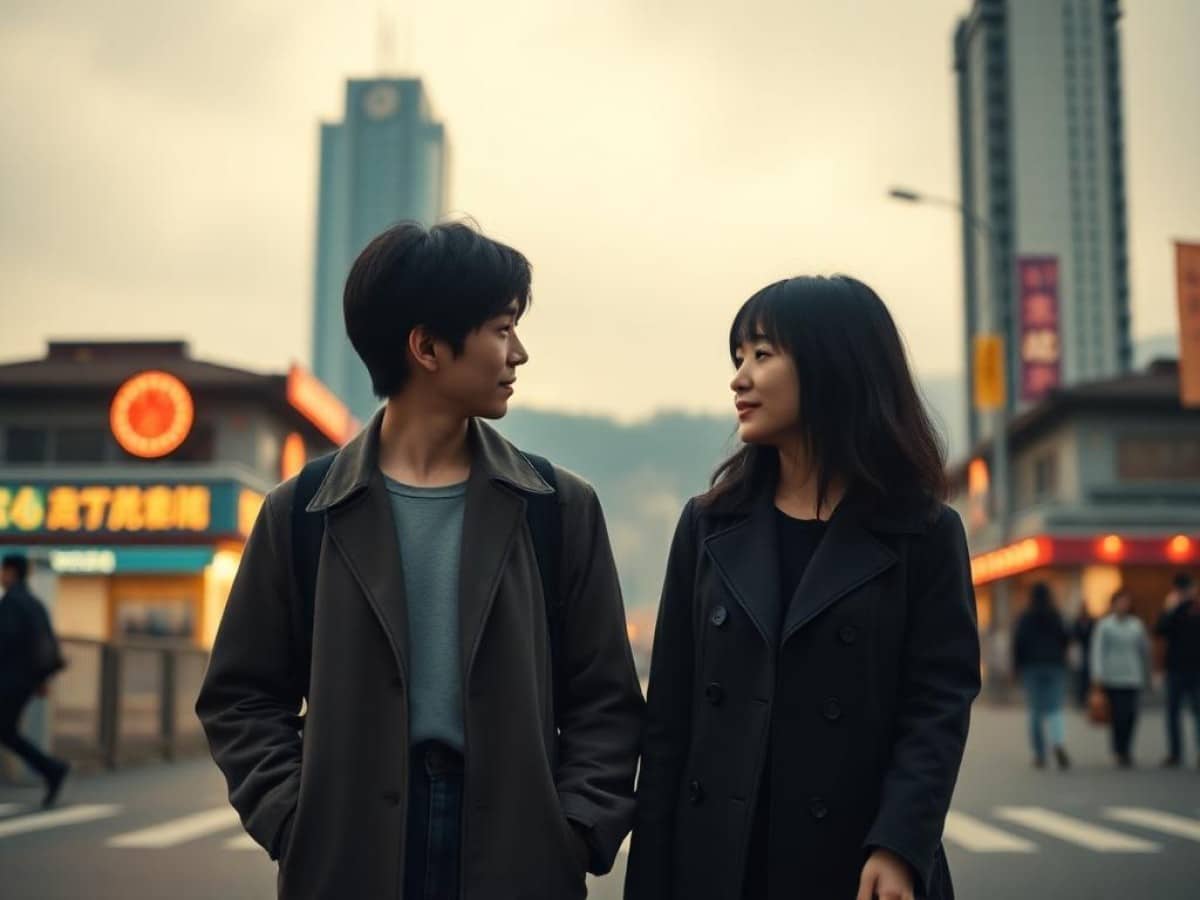
From the opening scenes, director Shih-Ching Tsou’s inaugural solo film, “Left-Handed Girl,” presents Taipei through a distorted toy prism, foreshadowing the film’s fluid structure. As the narrative unfolds, characters and circumstances splinter and merge in a dynamic dance of shifting allegiances and generational clashes within a Taiwanese family over several eventful months. While the film poignantly addresses the complexities of mother-daughter relationships, it captivates most with its dynamic portrayal of Taipei, portrayed as a vibrant backdrop to the lives of its characters.
Shu-Fen, portrayed by Janet Tsai, returns to Taipei with her daughters after years away. Her youngest, the curious I-Jing (played by Nina Ye), is fascinated by their new environment, especially the bustling night market where her mother starts a noodle shop. Conversely, her older sister, I-Ann (Shih-Yuan Ma), a college student, is less impressed, lamenting that their new apartment is smaller than it appeared in pictures.
Popular on The Bangin Beats
The narrative tension escalates quickly with financial pressures mounting on Shu-Fen, who also decides to cover the expenses for her ex-husband’s funeral. Meanwhile, I-Ann finds employment as a “betel nut beauty,” a role that involves provocatively selling stimulants in Taipei, which leads to a complicated relationship with her employer. Young I-Jing, meanwhile, takes delight in exploring the market and even adopts a meerkat.
Family dynamics grow tense with the presence of Shu-Fen’s critical mother, who is involved in questionable activities, and her father, who distresses young I-Jing by claiming her left-handedness is a sign of evil, leading her to start shoplifting with her left hand, influenced by his harsh words.
236M views in 10 weeks: how KPop Demon Hunters dethroned Red Notice
Materialists Raises Eyebrows: Sharp Satire or Elitist Attack on Modern Love?
Park Chan‑wook’s 2025 Venice Comeback: 6‑Minute Ovation and a 20‑Year Return
Julia Roberts’ 6‑minute ovation at Venice 2025 — the quote already igniting awards talk
Director Tsou skillfully navigates the film’s complex layers, balancing the narrative’s momentum with empathy for her characters, despite their flaws. The film only slightly veers into melodrama with a late scene involving a drunken confrontation and revelations that emerge in a chaotic social gathering.
While the plot may occasionally stumble, the film’s visual storytelling remains compelling, thanks to stunning iPhone cinematography by Ko-Chin Chen and Tzu-Hao Kao. The camera expansively captures Taipei’s neon-lit nightscape, creating a vivid portrait of the city. Tsou, a collaborator of Sean Baker, brings a similar aesthetic to “Left-Handed Girl” that was seen in Baker’s iPhone-shot film “Tangerine,” showcasing the progression of mobile cinematography.
Tsou’s earlier work with Baker, “Take Out,” which portrays the urgency of an undocumented immigrant, echoes in “Left-Handed Girl,” particularly resonating with Baker’s “The Florida Project” in terms of narrative style and editing techniques, especially in scenes captured from I-Jing’s perspective.
In a particularly gripping sequence, I-Jing races through the market to the sounds of pulsating music, her new mischievous activities thrilling her. This scene, along with others showcasing Taipei’s vibrant street life, underscores the film’s unique charm and its heartfelt homage to the city that feels like the first true home.
Similar Posts
- “Voice of Hind Rajab” Leads Asian World Film Festival: Packed with Global Oscar Hopefuls!
- Michelle Trachtenberg: A Stunning Visual Journey Through Her Career
- Luke Evans Teams Up With Noomi Rapace in ‘Traction’: Explosive Chechnya Action-Thriller Revealed!
- Good Chaos Inks Major Deal With Searchlight: Scaling Up With ‘Sisu,’ ‘Santosh,’ and Berger’s Latest!
- Inexplicable thirst hides the unthinkable: doctors give life-changing diagnosis

With a knack for uncovering hidden gems, Blake dives deep into the world of indie films and underground cinema.